
Pulse Oximetry
Pulse Oximetry
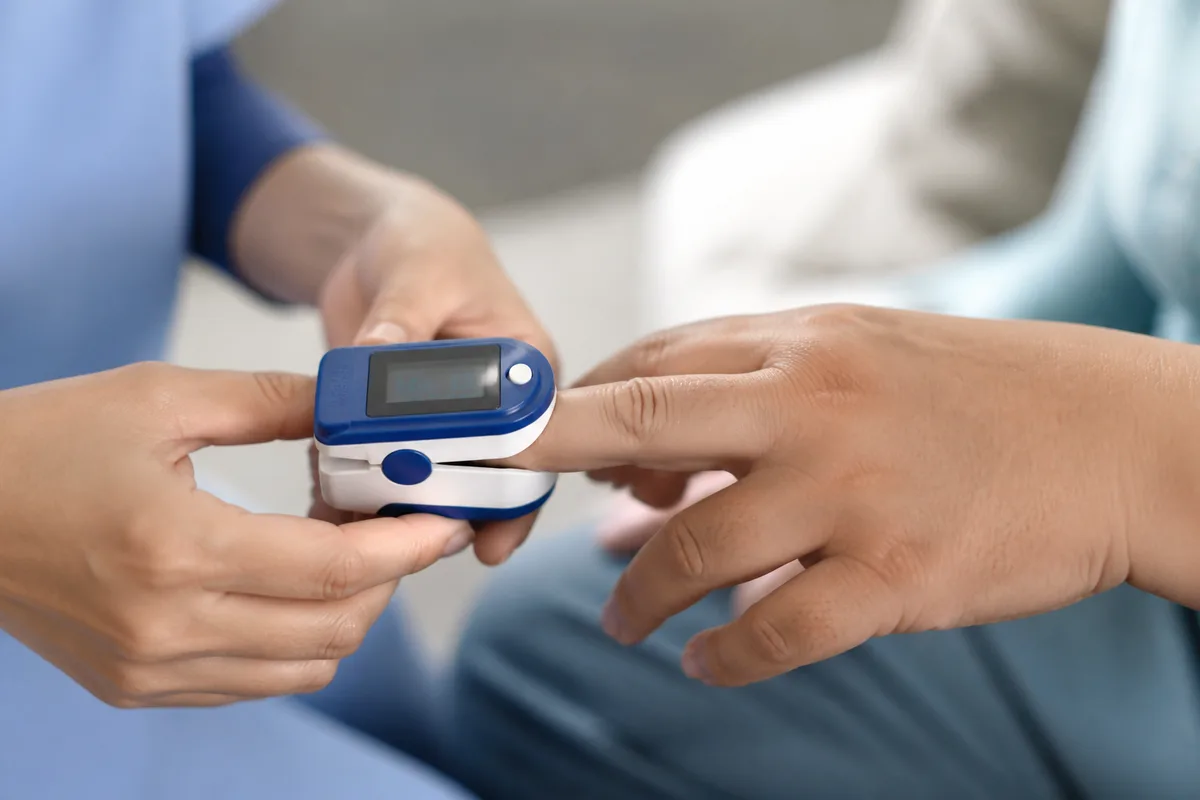
Pulse oximetry is a quick, non-invasive way to measure how well oxygen is moving through the bloodstream. A small sensor placed on a fingertip reads oxygen saturation in seconds, giving our care team helpful information during both same-day sick visits and ongoing chronic care monitoring.
When Pulse Oximetry Is Used
- Sick Visits — Checking oxygen levels can help clarify symptoms like shortness of breath, cough, or fatigue during an acute illness.
- Chronic Disease Management — Ongoing conditions affecting the heart or lungs are often tracked over time with regular oxygen saturation checks.
- Preventive Care & Wellness — Pulse oximetry may be included as part of a routine wellness visit to get a fuller picture of overall health.
Part of a Broader Vitals Picture
Pulse oximetry is often reviewed alongside other on-site measurements for a more complete view of a patient's health.
- Blood Pressure & Vitals Monitoring — Oxygen saturation is typically checked together with blood pressure and other vitals during a visit.
- Spirometry — For patients with respiratory concerns, lung function testing can complement an oxygen saturation reading.
- EKG Monitoring — When heart health is a concern, an EKG may be used alongside pulse oximetry to support a fuller evaluation.
This content is for general information only and isn't medical advice. Talk with your doctor about your own situation. If you have a medical emergency, call 911.